


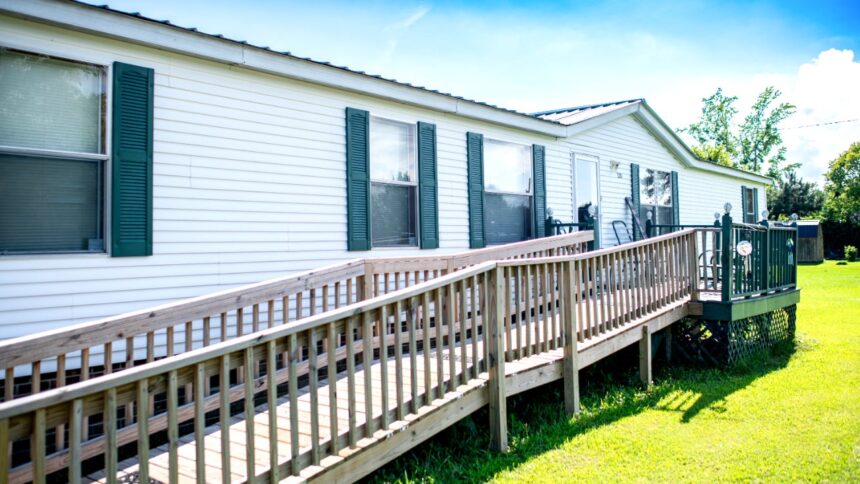
The median price of a traditional home is over $398,000, according to the National Association of Realtors, so manufactured homes can be more cost-effective while offering more flexibility. The average cost to build a double-wide home is fairly inexpensive, at about $162,100, according to Federal Reserve data.
However, finding a lender willing to finance the purchase of a mobile or manufactured home may take more effort than finding a traditional home. This is because most mortgage lenders do not offer financing for this type of property due to the low sales price and high depreciation rate. Still, there are several options available.
Mobile home financing options
A traditional mortgage may not be a viable option for financing your mobile home, so consider another type of loan. Carefully weigh the pros and cons of each to find the solution that best suits your needs.
FHA loan
The Department of Housing and Urban Development (HUD) offers mobile home loans through the Federal Housing Administration (FHA) loan program. This includes Title I and Title II loans.
Title I loans
Title I manufactured home loans can be used in several ways, including financing the purchase of a new or used manufactured home, refinancing the purchase of a manufactured home, purchasing a developed parcel on which to place this type of home, and purchasing both the land and the home itself. These funds can also be used for home remodeling, repairs, and improvements.
Lenders can offer Title I mobile mortgages even if the buyer does not own or do not plan to purchase the land on which the manufactured home will be built. These homes are typically located in manufactured housing communities or mobile home parks. If the borrower does not own or purchase the land, it must provide a signed lease on the mobile home site for an initial term of at least three years to qualify for a Title I loan.
The amount you can borrow with a Title I loan depends on the width of your home and whether you plan to buy a lot.
| purchase type | Loan limit |
|---|---|
| single wide house | $105,532 |
| Single wide house with lots | $148,909 |
| multi width home | $193,719 |
| Multi-width house with lots | $237,096 |
Title II Loan
This loan program secures loans that borrowers can use to finance eligible manufactured homes and lots. For example, Title II loans are only available if you plan to live in a manufactured home as your primary residence.
Other requirements for housing include:
- Minimum floor area of 400 square feet
- Must have been constructed after June 15, 1976
- Classified as real property, but not necessarily for state tax purposes
- Built on and maintained on a permanent chassis
- The loan must cover the house and the land on which it is built
Title II loans are not available for manufactured homes on leased land in manufactured home communities or mobile home parks. Title II loans have low down payments of 3.5% and terms of up to 30 years.
conventional loan
Conventional loans are private mortgages that are not backed by government agencies like FHA or VA, but often follow guidelines set by Fannie Mae or Freddie Mac. These loans can be used to finance homes that are owned as real property, sit on a permanent foundation, and were built after June 15, 1976.
fannie mae
Some financial institutions offer Fannie Mae-backed mortgages through the Manufactured Home (MH) Advantage program. The loan term is 30 years and the down payment is just 3%. As an added benefit, interest rates on MH Advantage mortgages tend to be lower than most conventional manufactured home loans.
To qualify, you must meet several eligibility criteria, including installing a driveway and a home with a walkway connecting the driveway, carport, or detached garage. The homes must also meet certain construction, architectural design, and energy efficiency standards similar to those built on-site.
freddie mac
You may be able to obtain conventional financing for manufactured homes through the Freddie Mac Home Possible Mortgage Program. Down payments start at as little as 3%, and in some cases, gifts or grants can be used to cover upfront costs.
Freddie Mac also offers home loans through its CHOICEHome Mortgage program. To qualify, homes must meet the same requirements as homes built on site and meet certain eligibility factors.
VA loan
Military members with an eligible service history may be eligible for loans backed by the U.S. Department of Veterans Affairs (VA). VA loans are intended to help military members become homeowners and can be used to purchase a manufactured or modular home and place it on land they already own, to purchase both a home and land at the same time, or to refinance a home they plan to transport to land they own.
Lenders can offer up to 100% financing on manufactured mortgages, but you’ll have to pay a one-time financing fee. For manufactured homes, it is usually a flat rate of 1% of the loan amount. If the home is already permanently attached to the foundation as real estate, a standard purchase fee of 1.25% to 3.3% may also apply, depending on the down payment and prior loan history. You will need an affidavit proving that the property is attached to land you own and meets certain local and veterans requirements.
chattel loan
A personal property loan is a special type of personal property loan that can be used to purchase a mobile home. These loans are designed to finance expensive vehicles such as airplanes, boats, mobile homes, and farm equipment, with real estate acting as collateral for the loan.
Some financial institutions offer personal property loans for the purchase of manufactured homes that are insured by FHA, VA, or Rural Housing Service (RHS) through the U.S. Department of Agriculture. Additionally, the closing process for personal property loans is typically faster and less restrictive than for traditional mortgage loans.
However, there are some disadvantages to property loans that you should be aware of. They typically have higher interest rates than traditional mortgages. Chattel loans also have shorter terms, so your monthly payments are likely to be higher than a traditional mortgage.
personal loan
Mobile homes are significantly cheaper than traditional homes, so you may be able to finance your purchase with a personal loan. Personal loans are flexible and can be used for almost any purpose, including purchasing a mobile home.
However, interest rates on personal loans tend to be higher than secured loans such as mortgages and car loans. In return, you don’t have to provide collateral, you won’t lose your home if you default on your personal loan, and the application process tends to be shorter and involve less paperwork.
Another important advantage of personal loans over mobile mortgages is that they are typically cheaper or free to originate, said Steve Sexton, CEO of Sexton Advisory Group. “There are no expensive title, escrow, or appraisal fees, and the loan is unsecured, so the lender has no interest or control over your home.”
Personal loan lenders typically offer loans of up to $25,000 to $50,000, but some lenders allow you to borrow more than $100,000. Your credit must be in good standing to qualify, and great credit personal loan rates can start at around 6.6%.
How to finance a mobile home
If you’re wondering how to finance your mobile home, there are some steps to follow first.
1. Check your credit report
Lenders will consider your credit as part of your loan application. A clean credit history and solid credit score make it easier to secure a loan with lower interest rates and better terms. If you check your credit report and find errors, you can dispute them with the appropriate credit reporting agency (Experian, TransUnion, or Equifax). Please allow up to 30 days for the office to respond. You can request a free copy of your credit report at AnnualCreditReport.com.
2. Deciding whether to purchase land in addition to the mobile home
When financing mobile homes, the stability of the property being financed is important, Sexton says. If you own the land and your mobile home’s axles and wheels have been removed, you are less likely to lift it and move it. This may make more financial institutions willing to lend to mobile homes. If you plan to rent land for your home, the amount you can borrow will be less than if you were buying land on which to build your home.
3. Know the details of the house you want to buy
The type of home you’re considering will affect the loan you’re eligible for. For example, if you want to buy a double-wide manufactured home worth more than $200,000, you won’t qualify for an FHA loan. Older mobile homes may not qualify for certain types of financing. Keep in mind that all lenders have specific lending criteria based on the type and value of your home.
4. Compare financing options
Choose the type of loan you want to use and compare services from different lenders. Mobile home interest rates and fees vary widely between lenders, so take the time to research them. Try to find a loan with low fees and low interest rates so you can minimize your borrowing costs. Doing your research and shopping around can save you thousands of dollars over the life of your loan and help you secure more favorable loan terms. Additionally, exploring financing options early will ensure that you’ll have access to a loan when you’re ready to buy.
5. Submit your loan application
You need to make sure your application is as complete and transparent as possible. Additionally, many financial institutions require a down payment, so have one ready when you complete your application. Being able to submit a complete application increases your chances of qualifying and helps the process go more smoothly. If you plan to take out a personal loan, you will need documentation to prove your identity, residence, employment, and income.
Mobile homes, modular homes, finished homes
You will often hear the terms mobile, manufactured, and modular used interchangeably when discussing these similar types of homes. Although these houses are related, there are some important differences.
Mobile homes are built at a factory and then brought to the site for installation. Metal tie-downs may or may not be used in place of traditional foundations. However, this description also applies to housing.
Like mobile homes, manufactured homes are built in factories. It can be installed in a permanent location on blocks, metal piers, or permanent foundations. Unlike mobile homes, manufactured homes are not intended to be moved once installed. They are typically more expensive than mobile homes, with an average sales price of $131,500 in October 2025, according to the U.S. Census Bureau.
Similar to mobile and manufactured homes, modular homes are built in a factory and transported to the land where they are installed. However, modular homes are similar to traditional homes. It often includes a crawl space or basement and uses a traditional foundation. Prices could range from $160,000 to $320,000, Angi said.
Factors to consider when buying a mobile home
Now that you know how to buy a mobile home or manufactured home, you should consider several factors to ensure you choose the best option, including location, size, and age.
current interest rate
As with any loan, mobile home interest rates and manufactured home loan interest rates fluctuate based on several factors. Your credit score, the amount of your down payment, the type of home you buy, and whether you purchase land will affect how much you pay. You can use this information to estimate your loan costs using our loan calculator.
To qualify for a low-interest mobile home, make sure your credit score is 700 or higher. To take advantage of the best interest rates, you need a score of 750 or higher and a low debt-to-income ratio. Average prices shown are as of March 13, 2026.
| Loan type | average price | typical minimum credit score | Typical terms |
|---|---|---|---|
| FHA | 5.84% | 500 | up to 30 years |
| fannie mae | various | 620 | up to 30 years |
| freddie mac | various | 680 | up to 30 years |
| chatel | From 8.39% | 575 | up to 20 years |
| personal | 12.26% | 600 | up to 7 years |
position
Before you think about anything else, decide where you will place your mobile home. The location you choose will greatly influence the rest of the process.
“Buying a mobile home and finding the right location is just like buying a home,” Sexton says. “Good neighborhood environments are important.”
You can choose to build your home on land you already own, purchase land to set your mobile home on, or rent land in a mobile home community. When purchasing land, consider zoning regulations and required utility connections.
size
Mobile homes and houses come in a variety of sizes. Larger homes are more expensive and require larger lots. Therefore, if you want a larger home, you may need to borrow more money.
Mobile homes are usually classified by width. Both classifications are typically about 70 feet long. The classifications that typically appear are:
- Single-wide home or unit: less than 15 feet wide
- Double-wide house or double unit: approximately 30 feet wide
“Many towns do not allow single-wide mobile homes to be built within their town or city limits,” Sexton said. “Be sure to research the rules that may apply to your situation.”
year
Unlike traditional real estate, mobile and manufactured homes tend to lose value over time. This means you can get a discount when you buy a used mobile home. The trade-off is that used mobile homes often show signs of wear and tear over time unless they are well-maintained.
Some locations do not allow placement of homes manufactured before a certain date, limiting your options. Purchasing an older mobile home may require the insight of an expert to assess its condition.
long term costs
One of the costs to consider when purchasing a mobile or manufactured home is the cost of mobile home insurance. Similar to standard homeowners insurance, this type of insurance provides coverage if your home is damaged or needs repairs.
Mobile home insurance often covers both the home itself and your personal belongings if they are damaged or stolen. You can also get insurance that includes liability coverage to protect you if someone is injured on your property and you are held responsible.
Standard mobile home insurance typically does not include hurricane, earthquake, or flood coverage, so you may need to purchase additional coverage for this protection. And just like traditional homes, the cost of mobile home insurance varies depending on the level of coverage.
conclusion
Mobile and manufactured homes can be much more affordable than traditional site-built homes, but financing can be difficult. Traditional mortgages are typically not available for purchasing mobile homes, so you should consider options such as FHA loans, VA loans, and personal loans.
You’ll also need to make sure the house isn’t too old to qualify and that it’s in the right location.