



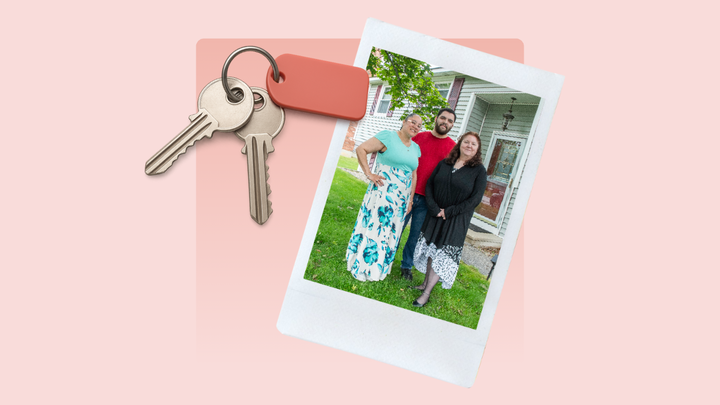
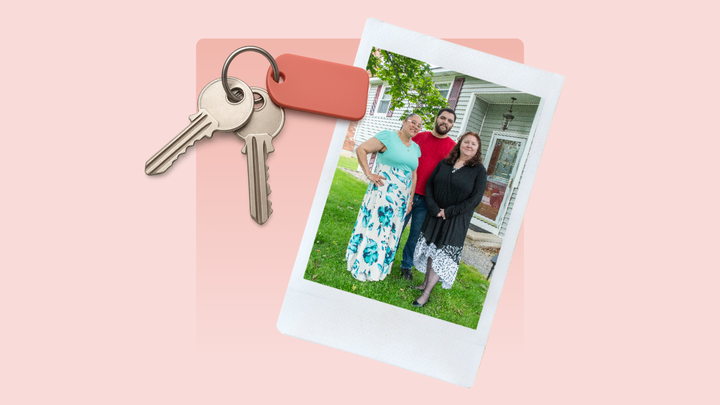
Cross photo, illustration: Clay Laucella/Bankrate
For some, southern New Hampshire is the perfect place for a three-day excursion or fall foliage trip from Boston. But for Ebony Martin, this is home.
Martin, 42, now owns a home in Manchester, New Hampshire, but there was a time when the market was so competitive that it felt impossible for him to break into the market. Martin had been looking on her own for more than a year, but “all I could find was a small cabin that needed to be completely renovated to live in,” she said. At that point, she was ready to give up.
Setting the stage for home buying
Manchester holds two unique titles: New England’s most populous city north of Boston and the hottest housing market in the country. Realtor.com’s February 2026 report ranked Manchester at the top of the top 20 popular real estate hubs, with an average of 3.4 viewers per property. The typical home in Manchester sells in 36 days, which is more than a month faster than in the rest of the United States
In February 2026, the median home sales price across the state reached $525,000, marking the 73rd consecutive month of increases in sales prices, according to a separate report from New Hampshire Realtors. It’s not just the Granite State where buyers are feeling pushed out. A 2025 Bankrate report found that those earning the median income are effectively priced out of 75% of the market.
Behind the scenes of her home buying experience
When she fled her abusive ex-husband’s home, Martin had only a suitcase full of clothes. From there, she moved into government-assisted housing, or Section 8, where she rented a three-bedroom apartment with six other tenants.
However, Martin wanted a more permanent landing site. “I had never really owned anything of my own before,” she recalls. “My goal was to stay off Section 8 and food stamps forever.”
She started looking for properties within her pre-approved range, but her options were limited. Martin continued to outbid smaller homes in his price range that needed major renovations to buyers with more purchasing power. As the house search dragged on, she began to worry that she might not find what she was looking for.
Martin began writing letters to potential sellers, letting them know that the house would be her and her family’s primary residence, not a second home or investment property. “It will be home,” she wrote. “We want to live here to be here.”
The letters didn’t work. To be able to afford a home, Martin needed to increase his purchasing power. A bigger budget would give her a better position in the competitive market. Around the same time, the building that Martin’s mother had rented for more than 20 years was sold. Now, she also needed a new place to live. In September 2024, mother and daughter pooled their income to stretch their budget and build more homes than Martin could afford on her own.
They also received a homebuyer education program and one-on-one counseling with NeighborWorks, a national network of more than 250 affordable housing nonprofits. Within two months, they were able to buy a two-bedroom house with a basement large enough for their in-laws’ apartment at a high price point.
her dream of homeownership
Owning one isn’t always easy, but it’s something she takes pride in, even though clearing New Hampshire’s heavy snow from her driveway isn’t her favorite activity. “I feel accomplished when I take care of my space and my home,” she says.