



“They wasted $16,000 trying to make $10,000,” said Douglas Lill, a Century 21 real estate broker in West Palm Beach, Florida.
He was representing the seller of a one-bed, one-bath townhouse listed for $195,000. An interested buyer made him a low offer of $165,000, and after some back and forth, a handshake deal was reached for $175,000.
But while Lil was preparing the paperwork, the seller changed his mind. They needed $185,000. The buyer walked away and the property sat on the market for eight months, costing the seller $2,000 a month in maintenance fees.
“I lost all my contracts over $10,000,” Lil laments.
Lill is seeing this situation more and more as the post-pandemic housing industry forces sellers to adjust their expectations and take ego out of the deal. Real estate agents across the U.S. Sunbelt, including states like Florida, Texas, Arizona and Colorado, are having to adjust standards with sellers as the market falls from pandemic-era highs.
The recent housing price boom is slowing or even correcting in many regions, particularly in some Sunbelt states. On top of that, sellers are competing for new construction in a market where cash-strapped buyers are already facing mortgage rates well above pandemic-era lows and home prices near record highs.
“Sellers need to bring a very good product to market,” says Dennis McManus, a real estate advisor with APEX Residential in Scottsdale, Arizona. “It has to look good, it has to look good, it has to be well presented and it has to be marketed.
With 26,000 homes on the market, your home will be more visible and priced appropriately. ”
— Dennis McManus
Real estate advisors Messrs. Engel and Voelkers.
All of this means that things have changed for buyers and sellers. During the coronavirus pandemic, people flocked from the Midwest and the coasts in search of warm, affordable weather, but now things have changed. Affordability pressures are reducing demand in the Sunbelt, while home prices continue to rise steadily in the Rustbelt and Northeast regions. This U-turn means Sunbelt buyers have more influence and can shop around for what they want. On the other hand, sellers have to work harder to compete.
It’s a new environment, and without properly calibrated expectations and planning, buyers or sellers can become disillusioned.
Purchasing new products can save buyers a lot of money
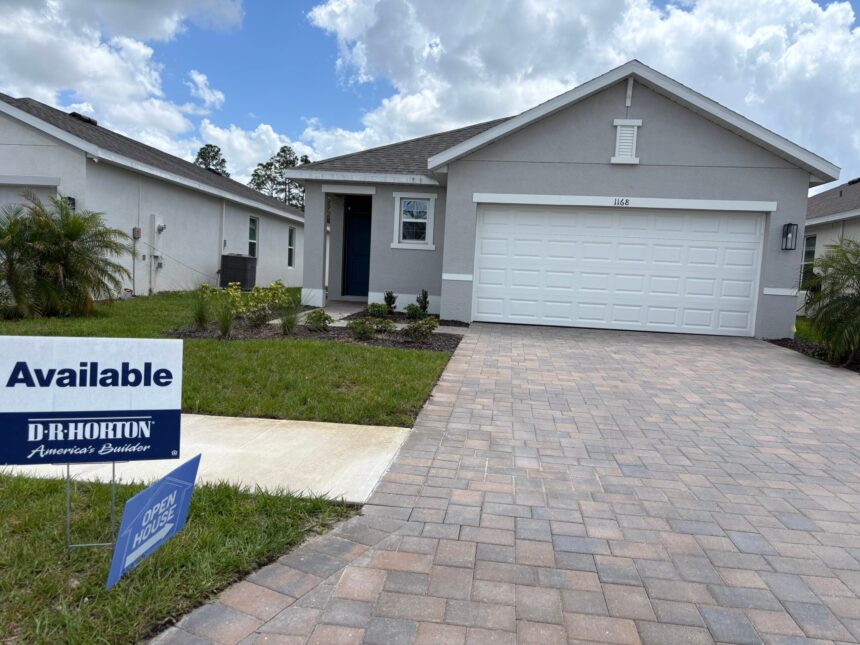
New homes are typically more expensive than existing homes, but 2025 saw significant price reductions. According to a recent report from Realtor.com, nearly one in five new homes sold at a discount in the fourth quarter of 2025. In addition, new construction can offer discounts on mortgage interest rates, something that existing homes don’t have. Many home builders own or are affiliated with mortgage companies and may offer significant interest rate discounts in the form of mortgage points or temporary buydowns.
For example, as of this writing, Starlight Homes is offering an adjustable rate mortgage (ARM) with an interest rate of 3.25% for the first five years. The interest rate then adjusts annually, increasing by up to 1% each year, up to a maximum of 8.25% over the life of the loan. The comparable ARM rate is currently 5.42%.
Therefore, builders partnering with lenders can attract buyers with new, move-in-ready homes by covering the financing costs. This will keep your monthly payments within the range of similar older existing homes. How can existing home sellers compete?
“We’re seeing new home construction sales include significant closing costs and moving packages,” said Kelly King, a real estate agent in Charlotte, North Carolina. These packages may include appliance upgrades, premium finishes, and more.
Not all new homes are created equal
But purchasing a new home isn’t all rosy for buyers. Often, due to the speed at which homes are built and their environment, newer homes can have issues that older homes don’t. Home inspections for new homes are just as important, if not more so, than inspections for existing homes.
“The main problem with new homes is that they have never been test driven,” says Nick Gromyko, founder of the International Association of Certified Home Inspectors (InterNACHI). “No one has ever lived there, so inspectors have to be careful not to overlook things that are too obvious, like a furnace simply not turned on or a bathtub drain not connected.”
If you’re buying a new home, you should understand whether the home comes with a warranty and what that warranty is and how long it lasts. Builders may be busy making repairs, but they may only have a limited time.
It is important to note that builders have a fiduciary duty to their shareholders to ensure that they do not exceed building codes.
Builders like to say the homes they build are “up to code,” but in reality they are. The code is minimal. If the builder made the house worse, it would be completely illegal.
— Nick Gromyko
Founder of the International Association of Certified Home Inspectors (InterNACHI)
Moreover, many Sunbelt states, including Arizona, Colorado, Nevada, and Texas, do not have statewide building codes. This means that the minimum requirements for acceptable buildings vary from city to city or county to county.
Different states have different interests.
Recently, some buyers have waived home inspections to make their offers more competitive. These tests are now being used as leverage in some regions. How much influence buyers have depends not only on the market but also on how the state handles real estate transactions.
For example, in North Carolina, in addition to the earnest money deposit, there is a non-refundable due diligence fee paid by the buyer, which can amount to several thousand dollars. If the buyer cancels the sale, you will often get your earnest money back, but not your due diligence money.
But people are still declining sales, which could be an opportunity for other buyers to step in and offer a lower price.
“We actually had a client who had just closed on her first home, and the person who previously had a contract on the home canceled the contract after the inspection, so we were able to make an offer on the home and save her money,” King says.
Things are handled very differently in Georgia, said Bettina Brown, a real estate attorney with Wiseman Law Firm in Atlanta. “Georgia has a very strong due diligence period, so buyers have a lot of protection and are not forced into buying a home they don’t want,” Brown says. “Some buyers changed their mind because there was a pill in the bathtub.”
Most states, like Georgia, don’t require due diligence fees, so if you can’t negotiate on an appraisal or inspection, the buyer may be more likely to walk away. Just as buyers in hotter markets need to prepare for a potential bidding war, sellers should also prepare for this possibility.
McManus says sellers can take steps to avoid this tension during inspection negotiations. “When I take on a listing, I have all sellers inspect it before listing,” McManus says. “We have the inspection report, so the seller has a chance. If we see any issues that might be a problem, we’ll fix them upfront.”
McManus said such preparations could ease tensions on both sides.
The shadow mortgage affordability squeeze hits Sunbelt states.
In addition to the market shifts occurring in many popular Sunbelt metropolitan areas, Florida and Texas in particular are experiencing changes due to rising costs and the aftermath of the pandemic boom. During the first half of this decade, many working professionals moved from expensive areas to large cities like Miami and Austin, resulting in significant population growth in both states.
But now, as home prices have soared, so have other costs for homeowners, such as taxes and insurance. According to the Tax Foundation, Texas has the seventh-highest property taxes and above-average homeowners insurance premiums. Florida ranks third in homeowners insurance, and in addition to expensive insurance, many homeowners pay high HOA fees. These costs, combined with soaring home prices, are squeezing demand in these states.
National housing price category
While all of this advice is local, there are national trends at play here. The low interest rate period from 2020 to 2022 saw a surge in demand for housing almost across the country. Homes had a limited amount of time on the market and often closed for more than the asking price. In general, sellers had to do little to make their homes competitive among eager buyers. The Sunbelt saw particular growth during this period. This migration, combined with available land and more friendly state regulations, led to aggressive construction in states such as Arizona, Florida, and Texas.
The situation is currently skewed as mortgage rates rise and remain elevated. According to the S&P Kotality-Case-Shiller Index, nationally, the increase in home prices in 2025 was the smallest since 2011. But this national picture does not speak to regional divisions. In the Northeast and Midwest, home prices continued to rise steadily in 2025, supported by cities such as Chicago (+5.3%) and New York (+5.1%). Conversely, cities like Tampa (-2.9%) and Denver (-2.1%) slipped into the red due to factors such as oversupply of housing and rising overall home prices.
While the Sunbelt’s price drop may seem like an extreme swing, many markets that had a boom during the pandemic are simply adjusting. For example, home prices in Miami fell 1.5% last year, but have risen an average of 3.1% annually over the past three years. In other words, last year’s price declines only offset the price increases seen earlier.
It sounds like a small fix on paper, but for sellers in these areas, it may be excruciating. Many people are trying to sell their home for what they thought it was worth, but when they hear that their home is overpriced, they may feel like they’ve missed the boat.
That’s because many Sunbelt cities had deep discounts in 2025. At the top of the list, West Palm Beach, Florida, had an average discount of 10.9% for homes sold below list price, according to Redfin’s MLS data analysis.
Further north, there are good deals in Charlotte, King said. “I had a client who got $10,000 in seller concessions plus 30 grand off the asking price.”
So while market readjustment can be a headache for sellers, buyers are in a better position to purchase a home.
Some things don’t change
Although the market is changing, there are some things that will always remain true in the real estate industry.
“It’s the same old story: ‘Pricing the property correctly,'” Lil says.
Unfortunately, real estate websites’ algorithms can be skewed to inflate sellers’ expectations of how much their home will sell for. Also, even if you are able to purchase the home with some negotiation, you may reject a buyer who is not interested in the home because of the list price. In this regard, McManus says it is the real estate agent’s duty to collect records of comparable home sales in the neighborhood and match the seller with a realistically obtainable price.
“If you don’t listen to your agent about pricing and just think about it randomly, no, the house won’t sell. And the longer it takes for the house to sell, the more people will think there’s something wrong with it,” Brown says.
This is a big change from years ago, when sellers simply had to list their home to start a bidding war. Now, to put a home on the market, sellers do more than just list their home and collect multiple offers. We’re talking open houses, new paint jobs, staging and updates. In some ways, this is a return to the old normal of home sales. This is a sign that the 2020-2023 home buying frenzy is over. The year is 2026, and these are Sunbelt real estate interests.